Exploring Definitions & Developing Summarising Techniques
Intended learning outcomes of this tutorial. You should be able to:
- identify different types of definitions
- construct technical definitions
- identify the formal properties of technical descriptions
- identify different stages of writing technical descriptions
- apply the linguistic features just learnt to writing technical descriptions
Major Parts Of Technical Descriptions
We’ll begin this unit by first exploring the formal properties of technical descriptions, and will later move on to developing the appropriate techniques and writing strategies for producing them. As definitions are frequently core elements of descriptions, we’ll start by discussing those below.
Definitions
In trying to understand why definitions are often appropriate ‘tools’ for producing technical descriptions, it may be useful to consider the following common-sense questions:
Think about the questions listed in the table above and fill in your answers in the boxes on the right.
Definitions can be of two different types:
- Formal definitions.
- Informal definitions.
Most of the time, people are not aware of the distinction between them, so let’s think about each type in turn and discuss where and when it may be appropriate to use them.
Formal Definitions
Perhaps the most common type of definition, at least in more academic contexts, is the formal definition. We encounter it e.g. in dictionary entries or textbooks when we try to find out information ourselves, or hear it frequently when someone else tries to explain something to us. A formal definition lists three different types of information: a term, a class (a category) to which the term belongs, and additional distinguishing information.
| Term | = | Class | Distinguishing Information |
|---|---|---|---|
| A flip flop | is | a circuit | containing active elements that can assume either one of two stable states at any given time. |
| An electrophorous | is | a laboratory instrument | used to generate static electricity. |
| Hypno-analysis | is | a psychoanalytical technique | in which hypnosis is used to obtain information from a patient’s unconscious mind. |
| An electron microscope | is | a microscope | that uses electrons rather than visible light to produce magnified images. |
Look through the table above and try to understand what each of the components of a definition is used for. Also try to identify any regularities in the way the descriptions are formulated in terms of grammatical features and vocabulary that expresses ways of classifying/categorising.
Extended Definitions
The definitions we saw above are essentially what we might find in a dictionary, where, for reasons of space, the explanations are generally kept quite short. If there is more space or we want to be more explicit about what we’re defining, we can also resort to extended definitions. For instance, in an encyclopaedia entry, we would generally not just encounter a basic formal definition, but also extended information because this type of reference material is geared more towards providing a deeper understanding of a topic, rather than just allowing us to look up the basic meaning.
Extended definitions are usually added after a formal definition and provide expanded explanations of the term being defined to help the readers understand the whole concept, not just the term. Some methods for extending definitions:
- Using an example
- Comparing and contrasting something
- Explaining the causes and the effects of something
- Illustrating useful applications of something
- Using a visual aid
The following is a brief example of what an extended definition might look like.
Plastics are synthetic materials. They can be softened and moulded into useful
articles. They have many applications in engineering. There are two types of
plastics: thermoplastics and thermosetting plastics.
ABS is a thermoplastic which is tough and durable. Because it has high impact
strength, it has applications where sudden loads may occur.
Nylon is a hard, tough thermoplastic. It is used where silent, low-friction
operation is required.
Acrylic can be formed in several ways. It is hard, durable, and has many uses.
Polyester resin is a thermosetting plastic used for castings. It has a number of
useful properties. (Glendinning & Glendinning 1995: 25)
This extended definition uses a number of common examples, “ABS is a thermoplastic”, “Nylon is a hard, tough thermoplastic”, etc.
When we need to write technical definitions for different terms, it is very tempting to resort to Wikipedia immediately. However, as explained in previous units, Wikipedia is not a very reliable source due to how their entries are written. Some better alternatives would be some creditable electronic resources available in the library. For instance, IEEE explore is a powerful resource for discovery and access to scientific and technical content published by IEEE (Institute of Electrical and Electronics Engineers) and its publishing partners. The contents within are not only more up to date, but also more credible because they have editorial gatekeepers to ensure the quality of the submitted articles.
Using the knowledge about general and extended definitions that you gained from the above, do some research using electronic library resources and then write technical definitions for some of the terms listed below. Remember that these definitions should be comprehensible not only to experts, but also lay people, so that they need to be as clear, general and easy to understand as possible.
Informal Definitions
Informal definitions are less specific than formal ones. This may be because sometimes it is simply not possible to give an exact definition, maybe because the topic under investigation may only be defined through empirical research before it is in fact possible to come up with a formal definition. In those cases, it may be necessary to first create a working/operational definition. Such a definition may be quite acceptable in a particular context because everyone will understand what is being talked about, without having to know every little bit of detail, too, as long as most of the necessary information is provided. Sometimes, a synonym may also count as a very brief informal definition. Let’s discuss both of these options again below.
Operational Definitions
Operational definitions are probably best ‘defined’ by giving an example. Let’s take the example of how to define the successful outcome of a project or enterprise. In a business context, for example, success may sometimes be defined as ‘increasing sales by 10 percent’, while, in a product design context, success may be designed in terms of ‘creating a successful prototype’. Thus, an operational definition essentially provides a concrete example of an abstract concept that would otherwise be very difficult and time-consuming to define, but only in the particular context where it is being used. This is very different from a formal definition, which is like an ‘eternal truth’ that is universally applicable.
Synonyms
Synonyms are words which express more or less the same thing. For example, one synonym of sad is unhappy and you can generally use the two inter-changeably. When using synonyms, put the common words to clarify technical terms in brackets or indicate the relationship in other ways, as in the following examples taken from the McGraw-Hill Dictionary of Engineering, apart from #3 and #4.
- Using parentheses:
“acoustic radar [ENG] Use of sound waves with radar techniques for remote probing of the lower atmosphere, up to heights of about 5000 feet (1500 meters), for measuring wind speed and direction, humidity, temperature inversions, and turbulence” - “active leaf (also known as active door) [BUILD] In a door with two leaves, the leaf which carries the latching or locking mechanism.”
- Using a dash: “At the edges of some of the maria we find indentations, each known as a bag – or a sinus”.
- Some communications protocols include “signaling” functions along with data. Channel Associated Signaling protocols – also called Robbed Bit Signaling – include signaling in the data channel (as opposed to a dedicated signaling channel).
Note that writers often highlight the term that they will define.
Working with & Understanding Definitions
In this section, we’ll practise working with definitions by evaluating them, identifying their sub-parts, or rewriting them as and when necessary. Do not use circular definitions, which somehow repeat all or part of the word being defined. You will not help a reader understand engineering if you use the word engineer in the distinguishing information. Terms from basic vocabulary, such as writing in the term technical writing may of course be repeated.
Read the definitions below. Some of them are circular. Code the circular definitions in red. The first sentence has been done as an example.
A pathologist is a person who studies pathology ⇒ circular
A pathologist is a person who studies diseases.
Paleontology is the science that deals with fossils.
Migration is the movement of animals when they migrate.
Behaviour is how a person or animal behaves.
Read through the following ‘definitions’. If a sentence is a formal definition, colour-code the class and its distinguishing information in green. If a sentence is not a formal definition, colour code it in red.
Distinction: A distinction is a characteristic that shows that one thing is different from another.
Reflex: A reflex is a movement that is unconscious or automatic.
Climate: Climate is the weather.
Soil: Soil is the top layer of the earth.
Taxonomy: A taxonomy is the science that deals with naming and classifying things.
Psychology: Psychology is about the mind.
Revise the following informal definitions into formal definitions:
Technical Descriptions
In technical writing, the language tends to be very specialized, i.e. many words are used which have meaning only for the people who work in the particular field. For example, in the technical description of tobacco, the words ovate and lanceolate are used since they are part of the working vocabulary of those who have a technical knowledge of plants.
The classic goal of technical writing is to provide full and exact descriptions, so that other people in other places may be able to replicate a product or a process based upon the text. To (supposedly) aid in this goal, the language is often deliberately impersonal.
How to Write a Technical Description?
Technical descriptions generally contain the following parts, which can be clarified through asking a set of associated questions:
| Part | Question |
|---|---|
| A definition | What is it? |
| A physical and spatial description | What does it look like? |
| A functional & process description | How does it work? |
As you can see, technical descriptions typically start with a definition and then give important physical features and their functions in the form of extended definitions that describe the shape and physical arrangement of objects, and/or illustrate how these objects work or a certain outcome can be achieved.
Physical & Spatial Description
Let’s look at an example of a physical description to see what it may look like. Here is a description of a desiccator, a device for extracting humidity. This description begins with an operational definition and a figure reference. The parts of the whole are then listed and described as follows:
A desiccator is a container which is used to dry and store samples in a low moisture atmosphere (Figure 3.1). It consists of four parts:
- The body in which the drying agent (desiccant) is placed.
- A ground glass lid which slides onto the body to form an airtight seal.
- A plate on which to place articles to be dried or maintained at low moisture levels.
- The desiccant, a material which can absorb large amounts of water. It should also be easily regenerated by heating and be inexpensive.
A desiccator (right) and a vacuum desiccator (left) – note the stopcock which allows a vacuum to be applied. The blue silica gel in the space below the platform is used as the desiccant.
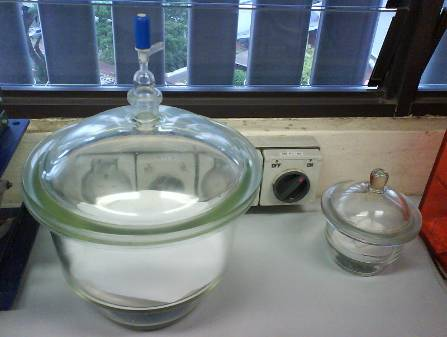
Figure 1: A desiccator (source: http://en.wikipedia.org/wiki/File:Desiccator.jpg)
This format is typical for describing simple devices. There’s i) a definition, ii) figure reference, and iii) a list of parts. The parts of the whole are listed beneath the main entry. Parts are usually labelled in the figure as well as the text, and the reader is expected to refer from the text to the figure, which is numbered. This example follows an important rule in technical writing: the text and illustration complement one another, which makes it easier to understand a complex object. The information in the illustration is frequently also labelled so that it coordinates with and expands the information in the text.
It may help the reader to follow an extended physical description if you use spatial expressions such as on the left/right, above/below, connected to, extending along the perimeter, etc.
Functional & Process Description
How does it work? When you try to answer this question, you’re describing a process, i.e. an ordered sequence of steps resulting in a particular state or product.
It’s difficult to write a clear, straightforward description of a process. Beginning writers often have trouble because they use too much detail without giving an overview (formal definition/summary). In other words, they don’t prepare the reader. Let’s look at an example description of how a (water) tap works:
A water tap is a device for turning on and off the flow of water. Its most important parts are a rod with a handle on the top and a washer which is fixed to the bottom of the rod. The metal parts of a water tap are usually made of brass because brass resists corrosion. The washer is made of a flexible material such as rubber or plastic.
When the handle is turned the rod either rises or descends because of the spiral thread. The column descends until the washer fits firmly in its “seat”. The tap is now closed and no water can flow out of the pipe.
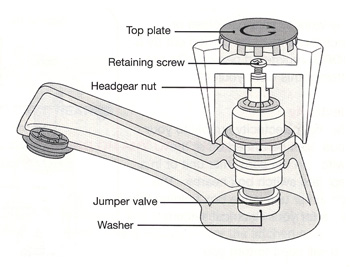
Figure 2: A water tap (Source: Durby City Council)
Words indicating temporal order (sequence) such as first, second(ly), then, later, afterwards used in the description may help the reader in following and understanding the process more easily.
What’s the writing plan for a technical description? Apply what you have learnt to complete the following tasks.
Text A below is a brief technical description of three physical parts of a Cisco router. Identify the main areas of descriptions.
Text A
USB PORT
The Cisco 860 series and Cisco 880 series routers have a single Universal Serial Bus (USB 1.1-compliant) port located on the front panel. The USB port provides connection for USB devices such as security tokens and flash memory.
FAN
Some router models do not have a fan, while others have either one or two fans.
The fans spin at full speed, as a diagnostic aid, immediately after the router is powered up. After the router has booted, the fans will spin continuously at a speed determined by a variable-speed controller. The fans spin only as fast as necessary to minimize fan noise while maintaining a safe internal operating temperature.
MEMORY
The Cisco860 series and Cisco880 series routers contain flash memory and main memory.
Flash Memory The Cisco860 series and Cisco880 series, and Cisco890 series ISRs use non-upgradable flash memory storage. Onboard flash memory contains the CiscoIOS software image, boot flash contains the ROMMON boot code, and quack contains the cookie configuration. The default flash memory for the Cisco860 series and Cisco880 series ISRs is 128MB. The default flash memory for the Cisco880 series voice routers is 256 MB.
Note Flash memory is not upgradable. An external USB flash may be used if additional flash memory is needed.
Main Memory The Cisco860 series and Cisco880 series routers contain 256 MB of onboard CPU memory. The Cisco880series routers contain a small-outline DIMM (SODIMM) expansion slot that accommodates a single PC2-4200, 256MB or 512MB double data rate 2 (DDR2) SODIMM, for a maximum of 768MB.
Text B below is a brief technical description of a Cisco router. Identify the three main areas of description, and discuss their functions in the passage.
Text B
The Cisco 860 series and Cisco 880 series Integrated Services Routers (ISRs) provide data, voice, wireless, integrated Virtual Private Network (VPN), and backup capability to corporate teleworkers and to remote and small offices with fewer than twenty users. These routers are capable of bridging and multiprotocol routing between LAN and WAN ports, and provide advanced features such as global industry standard) symmetrical high-speed DSL (G.SHDSL), 802.11n, quality of service (QoS), firewall, antivirus protection, and Secure Socket Layer (SSL). The Cisco 860 series and Cisco 880 series ISRs have a desktop form factor with built-in wall-mount features. These ISRs are powered by an external power supply adapter. The various models differ in the WAN interface and features that they support.
Writing Strategies
Sentence Structure & Voice
Write clear sentences and paragraphs for your reader. Following these simple guidelines for composing them will hopefully allow you to make your writing clearer.
When writing descriptive sentences, as much as possible try to stick to a basic active S-V-O order, rather than trying to use complex writing constructions that may confuse your readers. Although there’s a common belief that using passives makes descriptions more objective – and hence ‘scientific’ –, this is not actually the case, and all you’ll often achieve is an impression of ‘pseudo-objectivity’ at the expense of losing clarity. Using active voice demonstrates clearly who is responsible for which action, so, conversely, when it’s in fact unimportant who has performed a certain action or made a specific decision, then it may be appropriate to use a passive in order to emphasise a process. In order to develop a better feeling for when it may be better to use actives or passives, let’s do two short exercises. While you do the exercises, also think about whether you could reformulate the sentences somewhat to make them sound better.
Turn the following passive sentences into active ones.
Turn the following active sentences into passive ones.
Another important ‘strategy’ is to avoid using ‘hard words’, especially if you are unsure of their exact meaning. Often, simpler and more basic words may be far more appropriate than those of Latin or Greek origin, although, of course, you should still use appropriate terminology when it comes to discussing subject-related matter.
Using Linking Devices
Try to link your sentences together appropriately. Good linking indicates causal and temporal/sequential relationships between the ideas you discuss, as well as helping you to group related information together, which will probably make it easier for the reader(s) to follow your line of argumentation/thought. The following short essay represents an example of how not to write such an essay, and your task is to think about ways to improve the flow of the text.
An Essay About Me
I am Ming I am studying at Guangdong University of Foreign Studies. I work very hard every dayI also like playing a lot. I live far from schoolI prefer to stay on campus. I like computers surfing the Net. My friends all like playing computer games have lots of fun together.
Which linking devices would be most appropriate in order to make this essay sound more ‘fluent’?
| … to join related information | … to join unrelated/contrastive information | |
|---|---|---|
| 1 | ||
| 2 | ||
| 3 | ||
| 4 | ||
| 5 |
Paragraphing
Proper paragraphing is another highly important aspect of the writing process. In this context, it’s important to understand what exactly a paragraph means and also how this relates to the formatting used in a document. Essentially, a paragraph is a unit of sense that discusses a single aspect of what we are trying to describe in a coherent and cohesive manner.
Although this is not always necessary, a paragraph often begins with a topic sentence or at least a sentence that contains some of the key words that characterise the topic under discussion. This topic sentence or the key words generally introduce the core ideas expressed within the paragraph, which is/are then developed – and usually substantiated – within the remainder.
This notion of the paragraph containing, or elaborating on, a single, well-defined concept should also be reflected in its appearance. Every paragraph in a document should form a separate unit or block of text that is visually set apart from the rest of the text by an appropriate amount of spacing before and after it. This is why any decent word-processing software will allow you to define a paragraph in such a way that whenever you hit the enter/return key on your keyboard, this will automatically add an adequate amount of spacing before and after the paragraph, as well as format the paragraph with any line spacing, indentations, alignment, etc., that is appropriate for your particular writing purposes or publication format.
Tip: Modern word-processing applications make it quite easy to produce well-formatted, professional-looking text, generally using justification, such as in this document. However, badly justified text tends to look just as unprofessional as using left-alignment with a jagged right edge, so make sure that you hyphenate your document appropriately to make most efficient use of the space.
We will discuss further aspects of paragraphing and how it relates to sectioning, etc., in later parts of the course when we talk about how to go about writing longer documents.
References
Glendinning, E. & Glendinning, N. (1995). Oxford English for Electrical and Mechanical Engineering. Oxford: OUP.